
Pool Resurfacing for Rough, Stained, and Worn-Out Pools
Pool resurfacing replaces the tired surface of your pool with a new one, and at Aqua Creations that new surface is AQUA-GLASS™, a gun-laminated fiberglass finish applied by our own crews. We have done this work since 1991 on backyard pools, hotels, apartments, and community pools.
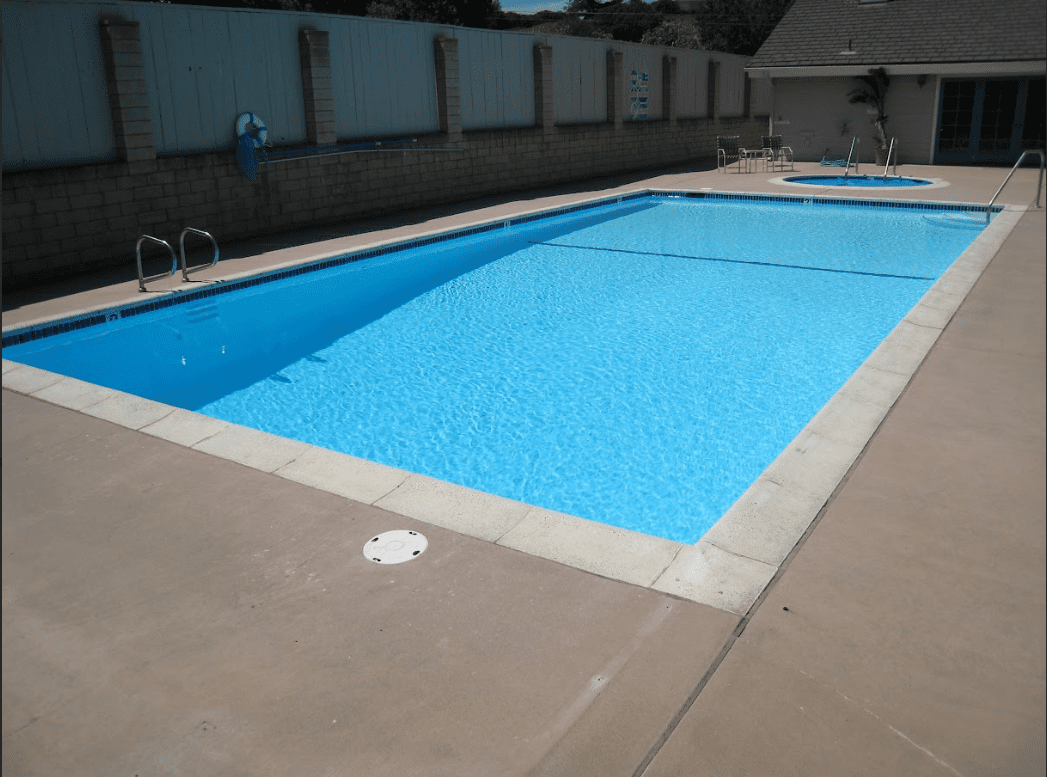 Resurfaced backyard pool
Tap what you are seeing in your pool
Most calls start with one of these five signs. Pick the ones that match your pool and read what each usually points to. It is a starting point for the conversation, not a diagnosis.
What it usually points to
1 of 5 selectedSelect a sign on the left. Each one opens a short, plain explanation here.
Run a hand along the floor and the steps. Roughness is the most common reason homeowners call us, and it is the easiest sign to check yourself.
One sign on its own is often a local problem. It may be repairable, so ask us to look before you commit to a full resurface.
When two or more signs show up together, the surface is usually worn as a whole rather than damaged in one spot. That is when resurfacing makes more sense than chasing repairs. Your picks are below; tap one to read it.
Roughness points to a cement surface that has etched away. Plaster is a cement product, and water chemistry slowly dissolves its top layer. Once the floor and steps feel like sandpaper, the surface itself is worn, and a resurface is the usual answer.
Some stains wipe away with a water balance correction. A surface that keeps staining in the same places is usually porous and worn, so the stain sits in the material rather than on it. That is a surface problem, not a cleaning problem.
A plaster surface that is breaking down can shed fine material into the water. If you balance the chemistry and the water still turns dull, the surface may be the source. It is worth having the shell looked at before buying more chemicals.
Fine webbing in old plaster is common and is usually a surface issue. A single long crack, or one that grows, needs an inspection of the shell before any new finish goes on. On an existing fiberglass pool, cracks are a repair job first.
This is the sign that most often rules out a patch. When plaster pulls away from the shell, new material cannot bond to it. That plaster has to be cut out and repaired before anything goes on top.
Plaster is cement, and pool water slowly eats it
Most pools we see were finished in plaster, quartz, or pebble. All three are cement-based, and cement reacts with the water it sits in every day of the year. Balanced water slows that down. It does not stop it, and no owner keeps the water perfect through every rainstorm, heat wave, and busy weekend.
Etching is what you feel as roughness underfoot, and an etched surface is also what holds stains. Research on plaster pools points to the water itself as the main cause, which is why a well-kept plaster pool still wears out.
So the question with an older pool is rarely whether the surface will wear. It is what to put back when it does. Replastering starts the same clock over. We resurface with fiberglass instead, laminated over the shell you already have.
- Aggressive water chemistry was the main driver of plaster deterioration in Cal Poly testing.
- Salt-sanitized test pools showed the most etching, though researchers called that result inconclusive.
- Separate research by Arch Chemicals found that high cyanuric acid levels also degraded plaster.
Pools and surfaces we resurface
Every one of these gets the same prep and the same AQUA-GLASS™ system, matched to the condition of the shell underneath.
Want to see finished jobs first? Browse the project gallery, or see every service we offer on our pool resurfacing services page.
Which kind of resurfacing your pool needs
The finish we put back is the same. What changes is the shell underneath and how much work it needs first.
How we resurface: gun-laminated fiberglass
Every Aqua Creations resurface uses AQUA-GLASS™, our gun-laminated fiberglass system, bonded over the shell you already have.
- Concrete and gunite pools
- Plaster, quartz, and pebble finishes
- Spas attached to the pool
- Hotel, apartment, HOA, and community pools
Plaster, gunite, and pebble pools
The most common pool we see: a cement-finished shell that has often been replastered at least once and is rough, stained, or etched again.
Plaster, gunite, and pebble resurfacingExisting fiberglass pools
Cracks, blisters, or a damaged area on a pool that is already fiberglass. Some need a repair, some need a full resurface, and we will tell you which.
Fiberglass pool repairFive things that set the cost of resurfacing your pool
We price every pool after we see it, because these factors vary more from pool to pool than any price list can show. We walk you through each of these at the estimate.
- Size and depth of the poolMore surface area means more grinding, more barrier coat, and more laminate. Deep ends and long swim lanes add up quickly.
- Condition of the shellLoose or hollow plaster has to be cut out and repaired before anything goes on top. We find out how much at the assessment.
- An attached spaA spa resurfaced at the same time as the pool is part of the same job and the same crew visit, and it adds to the scope.
- Tile and copingIf the waterline tile or coping is cracked or loose, replacing it while the pool is empty is the efficient time to do it.
- Commercial requirementsHotel, apartment, and HOA pools can need drain cover and safety upgrades for VGBA compliance, plus work windows that fit the property.
- Want the longer version?Our guide on how much pool resurfacing costs in 2026 walks through each factor in more depth.
From the people whose pools we resurfaced
Aqua Creations just completed the resurfacing of my pool. The project only took two weeks from draining the pool to refilling the pool. It turned out amazing! Kyle was great, all the workers were professional, very clean and took pride in their work. I can without reservation recomend Aqua Creations for your project. Mike Sanders
Extremely pleased with the final results! Everyone we worked with on the job was knowledgeable and professional, from Ole in sales, Eric with every answer to our questions… Awesome job from all. Won’t hesitate to recommend it to you.
Pool resurfacing questions we hear most
Straight answers to what homeowners and property managers ask before they book an assessment.
Still unsure what you are looking at? Read why pool surfaces stain or discolor and when the surface is the reason your water will not stay clear.
One problem in one spot, such as a single crack or a small stain, can often be repaired. When the floor is rough, the color is blotchy, and the water keeps clouding, the surface is worn as a whole and pool resurfacing is the better spend. A free assessment tells you which one you have.
No. Pool resurfacing replaces the surface you touch. The shell, its shape, and its place in the yard stay as they are, and any tile, coping, or drain cover work is scoped separately at the estimate.
It depends on the size of the pool and how much repair the shell needs. Our customers describe it in their own reviews: one pool was emptied on a Monday and finished on a Friday, and another took two weeks from draining to refilling. We give you the schedule for your pool at the estimate.
Pool resurfacing is priced per project, because size, shell condition, attached spas, and tile or coping work all change the scope. We do not quote a number before we see the pool. The estimate is free and carries no obligation.
Yes. Our crews work out of our shop in Ventura and resurface hotel, apartment, HOA, and community pools across Southern California and the Central Coast, in addition to backyard pools. The same in-house crews do the work on every job.
Find out if your pool needs a repair or a resurface
We look at the shell, tell you what the signs you are seeing actually mean, and give you a free estimate. There is no obligation to sign, and financing is available.
- Visit or mail1547 Los Angeles Ave, Suite #108, Ventura, CA 93004
- Office hoursMonday to Friday, 8 AM to 4 PM
- Emailaquaglass@aquacreations.com