Pool Resurfacing in Glendale, CA, From the Verdugo Foothills to Downtown
Aqua Creations handles pool resurfacing in Glendale from our shop in Ventura, about 56 miles away in a straight line. Our own crews apply AQUA-GLASS™ fiberglass to backyard pools up in the foothills and to apartment, condo, and hotel pools down in the flats.
From the Verdugo foothills down to Brand Boulevard
Glendale runs from the Verdugo Mountains and the San Rafael Hills down toward the Los Angeles River, with the 134, 2, and 5 freeways crossing it. Hillside pools on sloped lots and pools behind apartments and condos near downtown are both part of our work here. For shared pools, see commercial pool resurfacing. Public pools follow the health agency’s approved finish rules, so we do not offer custom colors on hotel, apartment, or HOA pools.
Glendale, Los Angeles County. Areas we cover:
Montrose · Verdugo Woodlands · Sparr Heights · Chevy Chase Canyon · Glenoaks Canyon · Rossmoyne · Adams Hill · Downtown Glendale · Tropico
What Glendale Water and Power puts in your pool
Glendale Water and Power is the city’s water utility. In its 2024 water quality report, 62.1 percent of the drinking water came from the Metropolitan Water District and 32.6 percent from local groundwater in the Verdugo and San Fernando basins. Each source carries a different mineral load, so the hardness at your hose depends on which blend reaches your street.
The report lists average hardness of 148 mg/L for water from MWD’s Jensen plant, 272 mg/L from MWD’s Weymouth plant, and 350 mg/L from the Glendale Water Treatment Plant. Divide by 17.1 and that is about 8.7, 15.9, and 20.5 grains per gallon. Anything over 180 mg/L is classed as very hard water.
In a pool, hard fill water means calcium that wants to come out of solution, most of all when the water is warm and the pH drifts up. On plaster, that calcium settles into a porous cement surface and builds a gray-white crust at the waterline and on the steps. Fiberglass is not porous, so scale has far less to grip and usually brushes off before it sets. Water chemistry still matters on any finish. What changes is how much a missed week costs you.
Sources: Glendale Water & Power 2024 Water Quality Report; hardness classes from the U.S. Geological Survey.
Hardness by source, 2024
Average total hardness, converted to grains per gallon
- MWD Jensen plant
- 148 mg/L, 8.7 gpg
- MWD Weymouth plant
- 272 mg/L, 15.9 gpg
- Glendale Water Treatment Plant
- 350 mg/L, 20.5 gpg
- Supply bought from MWD
- 62.1 percent
- Local groundwater
- 32.6 percent
Other foothill towns our crews cover
Glendale is one of the towns on our Los Angeles County list. Each neighbor below has its own water supplier and its own page.
Pasadena
East across the Arroyo Seco on the 134 freeway, with its own city water utility and its own annual water report.
Pool resurfacing in PasadenaAltadena
Up the slope above Pasadena in unincorporated county land, where several small water companies serve different parts of town.
Pool resurfacing in AltadenaArcadia
Farther east in the San Gabriel Valley, where the city pumps its water from groundwater wells instead of buying it in.
Pool resurfacing in ArcadiaWhat a Glendale summer does to the pool surface
The closest NOAA station with 1991 to 2020 normals is at the Burbank Glendale Pasadena Airport, just west of Glendale. It averages an 88.9°F high in August, about 54 days a year at 90°F or hotter, and only 13.91 inches of rain a year, almost all of it in winter.
That combination keeps the pool warm and keeps it losing water for months. Each top-off comes from the hard tap water described above, so the minerals keep building while warm water pushes them out onto the surface. On plaster, that shows up as scale at the waterline, rough steps, and algae in pitted spots.
To compare your pool with the usual wear signs, our pool resurfacing page walks through them.
- 88.9°Faverage August high
- 54days a year at 90°F or hotter
- 7days a year at 100°F or hotter
- 13.91 inaverage yearly rainfall
- NOAA NCEI 1991 to 2020 normals, Burbank Glendale Pasadena Airport station
Compare both finishes for a Glendale pool
Switch between plaster and AQUA-GLASS™ to see how each one handles the water and heat described above.
AQUA-GLASS™ is laminated with chopper guns over a vinyl ester barrier coat, and the full method is on our fiberglass pool resurfacing page.
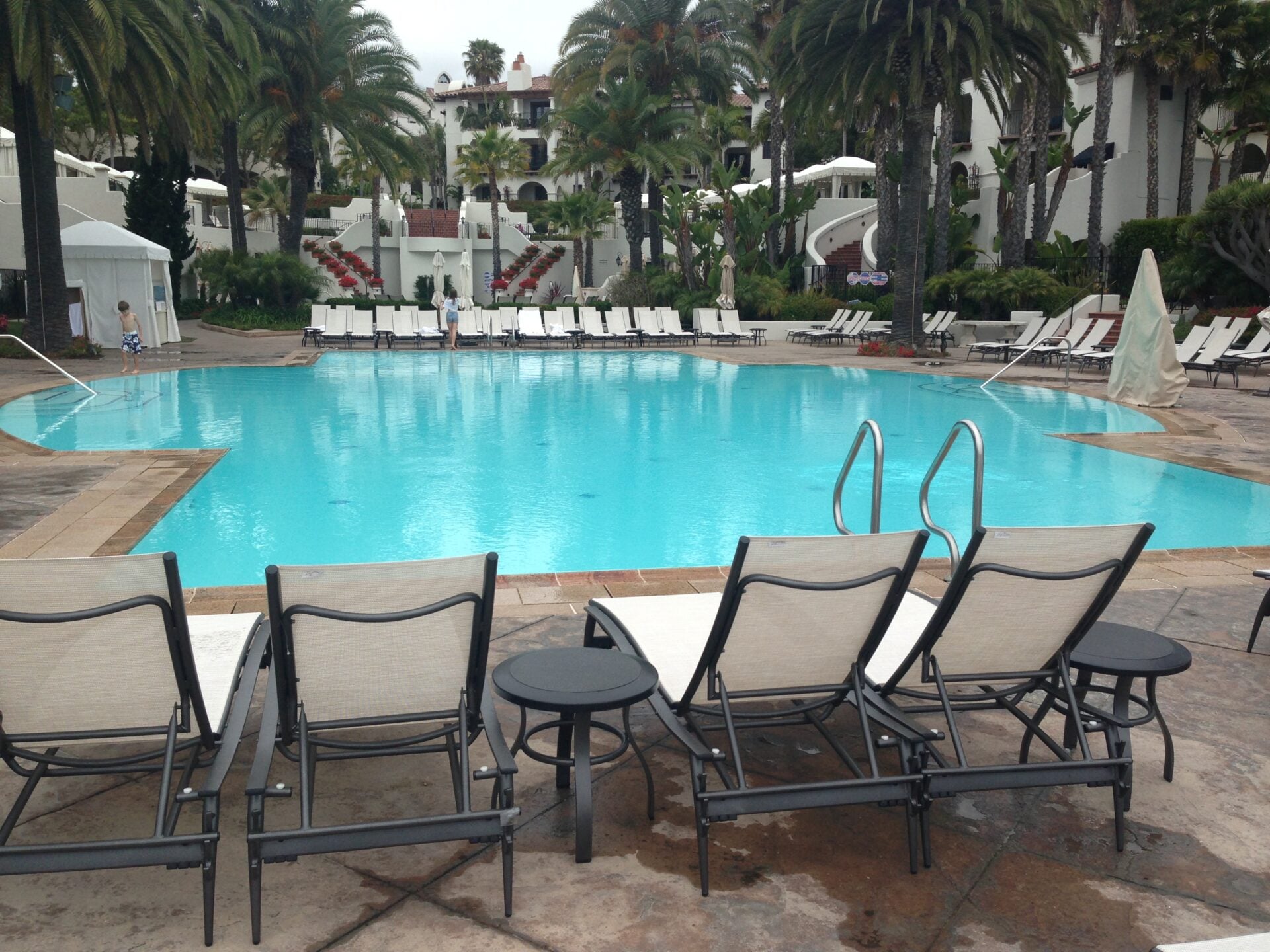
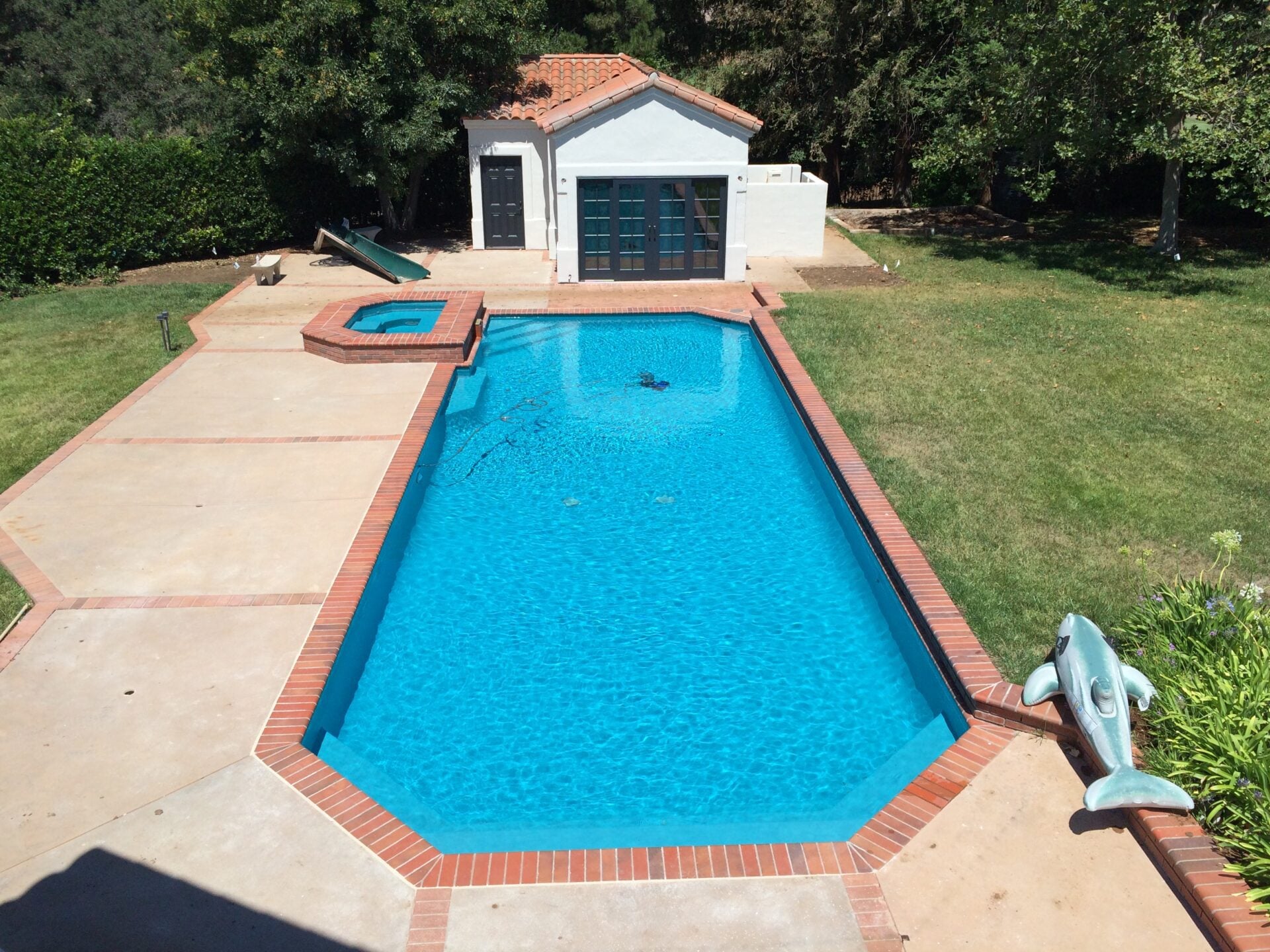
One resort pool and one backyard pool from our files
From our project photos. More finished work is in the project gallery.
Get a straight answer on your Glendale pool before the next hot season
Tell us where the pool is and what you are seeing. We will set up a free estimate, explain what your water and your surface are telling us, and answer your questions plainly. Financing is available.
- Visit or mail1547 Los Angeles Ave, Suite #108, Ventura, CA 93004
- Office hoursMonday to Friday, 8 AM to 4 PM
- Emailaquaglass@aquacreations.com