
Plaster Pool Resurfacing for Gunite, Concrete, and Pebble Pools
Plaster pool resurfacing at Aqua Creations removes the worn plaster or pebble finish from your concrete shell and replaces it with AQUA-GLASS™, a gun-laminated fiberglass surface. Same pool, same shape, and a surface that is smooth underfoot again.
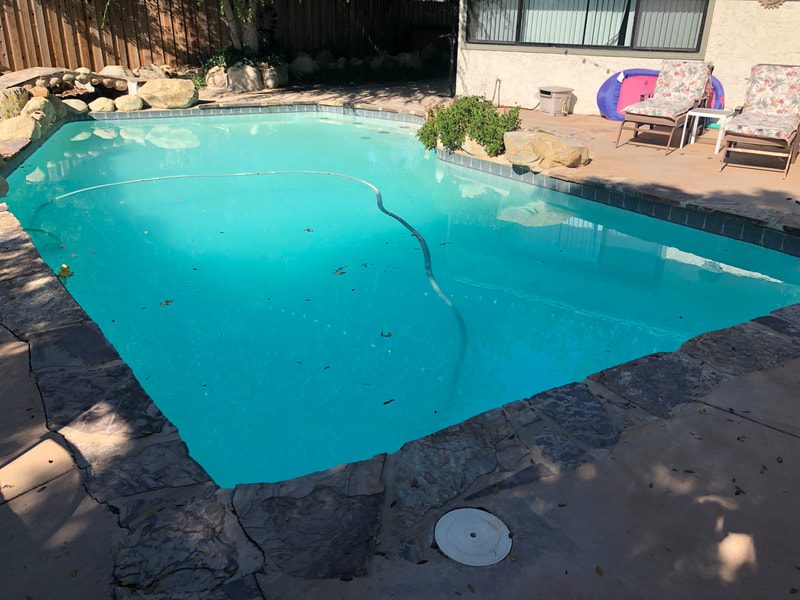 Worn plaster, before resurfacing
How a plaster finish tells you it is worn out
Plaster and pebble are cement-based finishes, so they wear in ways a fiberglass surface does not. These are the plaster-specific signs we look for at an estimate.
Etching
Plaster is cement-based, so water that is too acidic or too low in calcium slowly dissolves it. The surface turns sandy and rough, starting on steps and benches.
Mottled color
Plaster rarely wears evenly. Blotchy light and dark patches spread across the floor and walls, and brushing does not even them out.
Scale and white crust
Hard fill water leaves calcium deposits that build up on a porous plaster surface and roughen it further.
Hollow or loose plaster
Areas that sound hollow when tapped, or plaster lifting at the edges. These have to be cut out and repaired before any new surface goes on.
Pebble texture that bites
Exposed pebble is textured by design, but worn pebble feels sharp on feet, and stones can loosen and leave pits.
Stains that sink in
Because plaster is porous, metal and leaf stains set into the surface instead of sitting on top, and they come back after treatment.
Plaster, pebble, or AQUA-GLASS™ fiberglass
All three go onto the same concrete or gunite shell. The difference is what the surface is made of and how it is applied. Pick a finish to bring its column forward.
| Finish | Plaster | Pebble | AQUA-GLASS™ fiberglass |
|---|---|---|---|
| What it is | A cement-based finish troweled onto the shell | Small stones set in a cement mix, then exposed at the surface | Fiberglass laminated onto the shell with chopper guns over a vinyl ester barrier coat |
| Feel underfoot | Smooth when new, rougher as it wears | Textured by design, since the stones are exposed | Smooth; developed to be the most user-friendly pool surface we could build |
| How it goes on | Hand-troweled by a plastering crew | Applied like plaster, then washed to expose the stones | Gun-laminated by our in-house crew after the old surface is ground off |
| Color | White or tinted plaster | Set by the stone blend | Custom colors |
| Bond to the shell | Applied directly to the prepared shell | Applied directly to the prepared shell | Bonded through an unfilled, non-pigmented vinyl ester barrier coat, part of the system since 1994 |
Price and lifespan depend on your pool, so we cover them at the estimate.
What goes, and what stays
In 1991, most fiberglass pool work was rolled on with buckets and paint rollers over the old surface, and those finishes bonded poorly and cured unevenly. Our AQUA-GLASS™ fiberglass finish starts by taking the worn plaster off instead. The crew disk-grinds the plaster or pebble, repairs hollow areas, and gun-laminates the AQUA-GLASS™ system onto the shell; our fiberglass pool resurfacing page walks through each stage.
- Worn plaster or exposed pebble
- Loose and hollow patches
- Stains and scale set into the old surface
- The concrete or gunite shell
- The shape of your pool
- Tile and coping, unless you choose to replace them
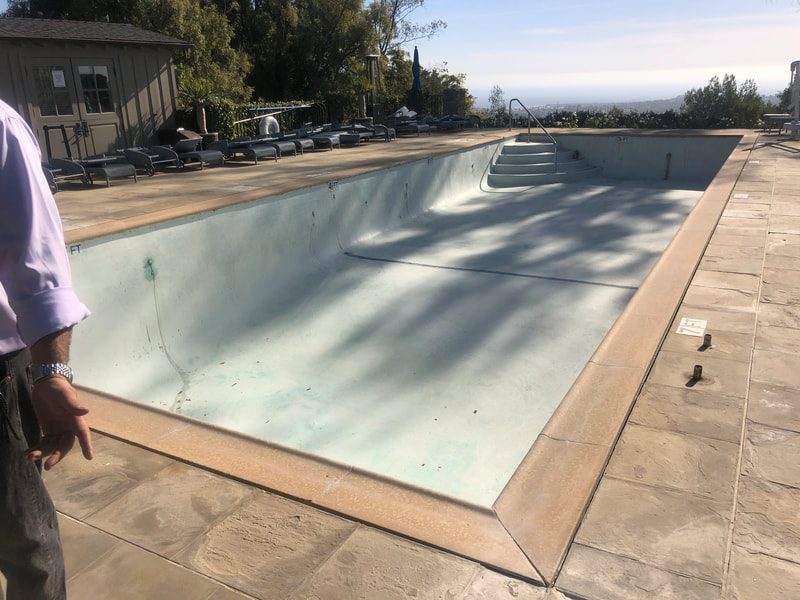 Prepped shell
A drained pool after surface prep, with the worn finish ground away.
One process for every concrete pool shell
Gunite and shotcrete pools are both concrete pools; the difference is how the concrete was sprayed when the pool was built. Either way, the plaster or pebble on top is the part that wears out, and the shell underneath is what we keep.
Pebble finishes come off the same way plaster does, stone and cement together, so a textured pebble pool can become a smooth fiberglass pool without changing its shape.
Most of these are family backyard pools, and our residential pool resurfacing page covers scheduling, colors, and what to expect while the crew is in the yard. Plaster work is one part of our full range of pool resurfacing services.
Aqua Creations just completed the resurfacing of my pool. The project only took two weeks from draining the pool to refilling the pool. It turned out amazing! Kyle was great, all the workers were professional, very clean and took pride in their work. I can without reservation recomend Aqua Creations for your project. Mike Sanders
Before you book another replaster
The questions homeowners ask most when they are deciding between plaster and fiberglass.
See finished poolsYes. Plaster pool resurfacing with AQUA-GLASS™ grinds off the existing plaster and bonds a fiberglass laminate to the concrete shell underneath, so the pool keeps its shape.
Usually it costs more up front, because grinding off the old finish and laminating fiberglass is more work than a new coat of plaster. If you are facing another replaster, weigh that difference against starting the same cycle again. We give you a free estimate so you can compare it with a replaster bid directly.
Yes. Pebble finishes are ground off the same way plaster is, and the shell then gets the same AQUA-GLASS™ system as a plaster pool. If the texture underfoot is the reason you are calling, a smooth fiberglass surface deals with it directly.
That depends on the size of the pool and how much of the shell needs repair. We set the schedule at the estimate once we know how much hollow plaster is likely. Our crews work on plaster and pebble pools across Southern California and the Central Coast.
Find out what is under your plaster
We will look at the shell, tell you what grinding is likely to uncover, and lay out the cost of moving from plaster to AQUA-GLASS™ fiberglass. The estimate is free and there is no obligation.
- Visit or mail1547 Los Angeles Ave, Suite #108, Ventura, CA 93004
- Office hoursMonday to Friday, 8 AM to 4 PM
- Emailaquaglass@aquacreations.com