
Fiberglass Pool Resurfacing, Gun-Laminated Over the Shell You Already Have
Fiberglass pool resurfacing bonds a new laminate to your existing pool, so a worn concrete, gunite, or plaster shell gets a smooth fiberglass surface without being torn out. Aqua Creations has resurfaced pools this way since 1991, with our own crews on every job.
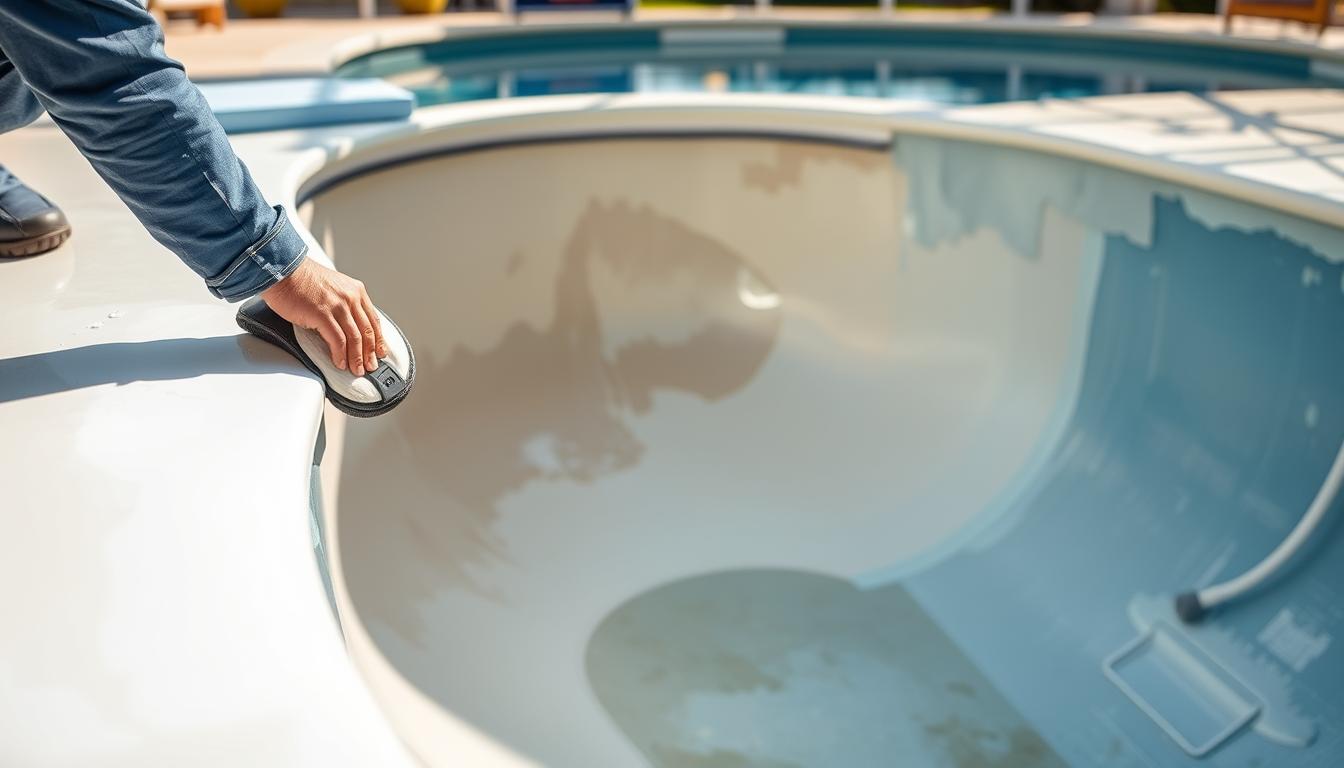 Stage 1: disk-grinding the old surface
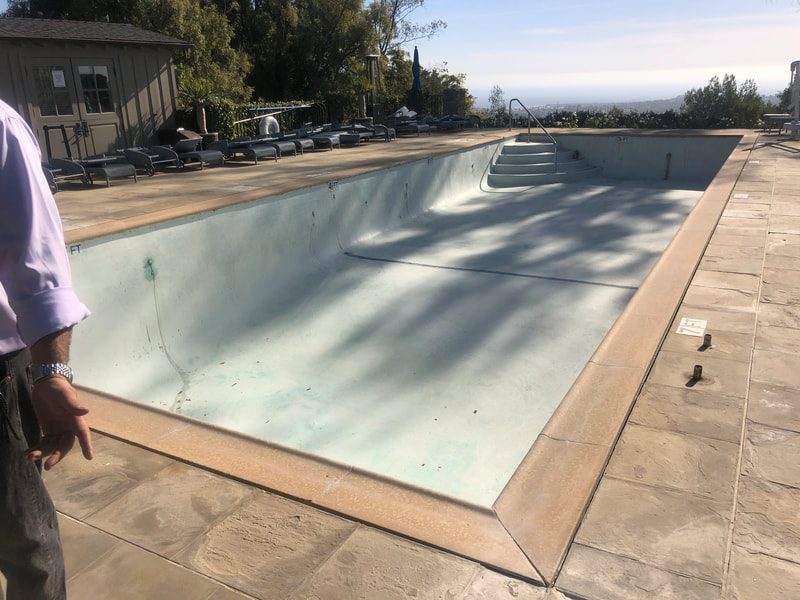 Shell prepped for lamination
A fiberglass laminate built inside your existing pool
A resurfaced pool keeps its shape, its plumbing, and its place in the yard. What changes is the surface you touch. Instead of another coat of cement-based plaster, the shell is ground back, repaired, sealed with a barrier coat, and laminated with fiberglass.
The result is a smooth fiberglass interior over a concrete, gunite, or plaster structure. It is the method Richard Dietz Sr. brought to Southern California in 1991 because most fiberglass pool work at the time was rolled on with buckets and paint rollers, and those finishes bonded poorly and cured unevenly.
Our system has a name, the AQUA-GLASS™ fiberglass finish, and it is the only fiberglass system we install. If you are still weighing materials, our article on fiberglass vs. plaster lays out the choice.
Step through how your pool is resurfaced
Every AQUA-GLASS™ job follows the same order, done by the same in-house crews. Select a stage to see what happens, why it is there, and what to ask us about it.
Disk-grind the old surface
The crew disk-grinds the existing finish down until what is left is sound material. Old plaster, old coatings, and anything that has started to let go come off first.
Fiberglass can only hold as well as the surface under it. Grinding gives the barrier coat and laminate sound material to bond to, rather than an old coating that may already be letting go.
How much of your old surface is likely to need grinding back, based on its condition today.
Repair loose or hollow plaster
Grinding exposes the weak spots. Plaster that is loose or hollow is cut out and repaired before anything new goes over it, so the shell is solid edge to edge.
A hollow patch under a new finish is a failure waiting to happen. This is the stage that separates a resurface from a cover-up.
Where your shell is likely to need plaster repair, and how that could affect the schedule.
Apply the vinyl ester barrier coat
An unfilled, non-pigmented vinyl ester resin goes on as a bonding barrier between the shell and the laminate. Aqua Creations made it part of every job in 1994.
Vinyl ester is the resin boat builders turned to for holding off osmotic blistering, the water-driven failure that ruins fiberglass laminates.
Why the barrier coat carries no color and no filler.
Laminate with chopper guns
Fiberglass is sprayed on with chopper guns, which spray chopped glass into a stream of catalyzed resin. This applies about 30% more material than rolled-on methods.
More material in the laminate means a thicker fiberglass layer across the floor, walls, and steps than a roller puts down.
Which finish colors are available for your pool.
The full installation sequence, stage by stage, is in our article on the AQUA-GLASS™ process.
Water is the enemy of a fiberglass bond
A pool surface spends its whole life under water. In fiberglass work, the classic way a laminate fails is from water working its way into the layers, where it weakens the resin and builds pressure until blisters form. Boat builders call it osmotic blistering, and they have studied it for decades.
Practical Sailor, reporting on hull blisters, notes that builders found vinyl ester resin could produce relatively blister-free laminates, and that a layer of vinyl ester about eighty thousandths of an inch thick would hold off the osmotic permeation of water.
That is the reasoning behind the barrier coat we added in 1994. It sits between your shell and the fiberglass, unfilled and non-pigmented, so nothing in it weakens the bond.
The barrier coat, spelled out
Part of every AQUA-GLASS™ job since 1994- Resin
- Vinyl ester
- Filler
- None (unfilled)
- Pigment
- None (non-pigmented)
- Goes on
- After grinding and plaster repair, before lamination
- Job
- Bonds the laminate to the shell
Pools we resurface with fiberglass
Most in-ground pools can take a fiberglass resurface. The shell decides how much prep comes first.
Plaster, gunite, and pebble pools
The most common candidate. The cement finish is ground off, hollow spots are repaired, and the laminate goes over the structure.
Plaster and pebble poolsPools that are already fiberglass
An older fiberglass pool with cracks, blisters, or worn areas may need a repair rather than a full resurface. We assess it and tell you which.
Fiberglass pool repairHotel, apartment, and HOA pools
Commercial and community pools go through the same four stages as a backyard pool.
All resurfacing servicesHow long a fiberglass resurface lasts depends on the pool and how it is cared for. We cover what our own projects show in how long fiberglass pool resurfacing lasts.
A fiberglass resurfacing customer, in their words
Our pool was resurfaced with Aqua Creations fiberglass process. Kyle, Eric and the whole crew were great. Emptied the pool on Monday and they finished on Friday. Pool is beautiful. Highly recommend.
Fiberglass pool resurfacing, answered
What homeowners and property managers ask us before a fiberglass resurface.
Yes. Fiberglass pool resurfacing is designed to bond over existing concrete, gunite, plaster, and pebble shells, and over older fiberglass. The old surface is ground and repaired first, so the laminate bonds to sound material.
Cleaning leaves the old finish in place, and the new laminate is only as strong as whatever it sits on. Disk-grinding removes the weak top layer so the barrier coat and fiberglass bond to the shell itself.
It is the bonding layer between your shell and the fiberglass laminate. Vinyl ester resists water permeation, which matters in a structure that holds water every day. We have applied it on every AQUA-GLASS™ job since 1994.
Yes. Rolled-on fiberglass is applied with buckets and paint rollers, and that method was known for weak bonds and poorly cured finishes. Our fiberglass pool resurfacing uses chopper guns that apply about 30% more material.
Our own employees. Aqua Creations has never used subcontractors for AQUA-GLASS™ work, and the same in-house crews grind, repair, coat, and laminate every pool we resurface across Southern California.
Ask what fiberglass would take on your pool
We look at the shell, tell you how much grinding and repair it is likely to need, and go over finish colors with you. The estimate is free and there is no obligation.
- Visit or mail1547 Los Angeles Ave, Suite #108, Ventura, CA 93004
- Office hoursMonday to Friday, 8 AM to 4 PM
- Emailaquaglass@aquacreations.com